


How to Get a Home Energy Audit in Ottawa (Step-by-Step Guide)
Getting a home energy audit in Ottawa is one of the best steps you can take to improve your property’s energy efficiency and comfort. Ottawa’s cold winters and hot summers mean that any wasted energy can quickly drive up utility bills. Whether you’re a homeowner looking to save on heating costs, a landlord aiming to improve your rental’s efficiency, or a business trying to reduce overhead, a home energy audit (also called an energy assessment Ottawa professionals offer) will provide valuable insights. In this guide, we’ll explain how to get a home energy audit in Ottawa step by step, highlight the benefits, and show how local experts like MUS Energy Solutions can assist with improvements like insulation and air sealing. By the end, you’ll know exactly what to expect and how to make the most of an energy audit for your Ottawa property.
Why Get a Home Energy Audit in Ottawa?
A home energy audit Ottawa residents trust provides many advantages for property owners. Here are some key benefits of scheduling an energy assessment:
Identify Energy Wastes and Save Money: An audit pinpoints where your home is losing energy – such as drafty windows, poor insulation, or inefficient HVAC systems – so you can fix those issues and save on utility bills. In fact, by implementing the recommended upgrades from a professional energy audit, you can save 5% to 30% on your energy bills on average. Over Ottawa’s long heating season, those savings add up significantly.
Access Rebates and Incentives: Many government rebates and incentive programs (federal, provincial, or through utilities) require an energy audit before and after upgrades. In Ottawa, programs have offered refunds for audit costs and grants for improvements. A home energy assessment Ottawa homeowners get is often the first step to qualify for rebates on insulation, windows, furnaces, and more. (Always check current programs – for example, past initiatives like the Canada Greener Homes Grant and Enbridge incentives helped cover audit costs and upgrade expenses.)
Improve Home Comfort and Value: An energy audit will reveal issues like cold drafts, uneven heating, or poor insulation levels. By addressing these, you can make your home more comfortable year-round. Eliminating drafts and adding insulation (such as spray foam in key areas) will keep your home warmer in winter and cooler in summer. A more efficient home is also a selling feature – energy efficiency upgrades can boost property value and appeal to eco-conscious buyers or tenants.
Trusted Expert Advice: The audit is performed by a certified energy advisor who provides an unbiased, expert analysis of your home’s performance. Rather than guessing where to upgrade, you’ll have a data-driven report on exactly what will benefit your home most. This builds trust that your renovation dollars go to the right places. With MUS Energy Solutions – a local Ottawa company with deep expertise in insulation and building science – you also gain a partner who understands our community’s housing types and climate challenges.
In short, How to Get a Home Energy Audit in Ottawa isn’t just about checking a box – it’s about empowering yourself with knowledge to make smart improvements. Next, let’s look at what a home energy audit involves and how to get one step by step.
What is a Home Energy Audit?
A home energy audit (or home energy assessment) is a comprehensive evaluation of how your house uses and loses energy. It’s like a thorough check-up for your home’s efficiency. During an audit, a registered energy advisor examines all the key areas of your house to find inefficiencies. They will inspect for air leaks and drafts, assess insulation levels in the attic and walls, check windows and doors for gaps, evaluate heating and cooling systems, and even test appliances or ventilation in some cases. The auditor may use specialized tools, such as infrared cameras to spot hidden insulation gaps, and will perform a blower door test to measure how airtight (or leaky) your home is. The result is a detailed report on your home’s current performance and a list of recommended upgrades to improve its energy efficiency.
Ottawa homeowners often ask “Do I really need an energy audit?” If you suspect high energy bills, uneven temperatures in rooms, or just want to take advantage of rebates, an audit is absolutely worth it. It provides a clear roadmap for upgrades – from sealing air leaks to adding insulation or upgrading heating systems – so you can tackle the most impactful projects first. Now, let’s dive into how to get a home energy audit in Ottawa with a step-by-step approach.


Step-by-Step: How to Get a Home Energy Audit in Ottawa
Getting a home energy audit in Ottawa is straightforward. Follow these steps to schedule an audit and get on the path to a more efficient home:
Research Certified Energy Auditors in Ottawa. The first step is to find a qualified professional or company to perform the audit. In Canada, energy audits for rebate programs must be done by NRCan-registered energy advisors. Look for local Ottawa services that specialize in energy assessments. You can search through Natural Resources Canada’s list of licensed service organizations, or simply contact MUS Energy Solutions, which offers home energy audit Ottawa services with certified advisors. Make sure to choose an auditor with experience in Ottawa’s climate and housing (MUS, for example, has performed audits on all types of homes – from older downtown houses to newer builds in Kanata – giving them broad local expertise). Don’t hesitate to ask about credentials and what the audit will include.
Contact the Auditor and Schedule the Energy Audit. Once you’ve identified a trusted provider, reach out to schedule your home energy audit. You’ll typically discuss your home’s details (size, age, type of heating, etc.) and the auditor will explain the process and fee. In Ottawa, a professional energy audit usually costs around $500 to $700 for the initial evaluation. (If you plan to apply for rebates, this fee might be reimbursed later, and a follow-up audit after renovations often costs less, typically $200–$300.) Schedule the audit for a time you can be home – audits often take about 2 to 3 hours to complete, and the homeowner or legal owner should be present. MUS Energy Solutions can often accommodate appointments in the evening or on weekends to fit your schedule, but be sure to book in advance during peak seasons (fall and spring are popular times for audits).
Prepare Your Home for the Energy Assessment. Before the auditor arrives, you’ll want to prep your home to ensure the process goes smoothly. Close all windows and doors tightly and seal up any obvious openings; the auditor needs the house in a normal “closed” state for accurate testing (especially for the blower door test). If you have a wood-burning fireplace, avoid using it for at least 24 hours before the audit and close the damper. Make sure the auditor can access key areas: unlock the attic hatch, clear away items blocking the furnace, hot water tank, or crawlspaces, and ensure all rooms are accessible. Having your property tax bill or roll number on hand can be helpful if the audit needs that info (sometimes required for official reports). Essentially, think of it like preparing for a home inspection. The MUS Energy Solutions team will provide you with a checklist beforehand – for example, they’ll remind you to remove or secure pets during the audit and to prepare a list of any specific concerns you want them to focus on (drafty master bedroom, cold basement, etc.). A little preparation will help the energy assessment Ottawa process go off without a hitch.
Attend the On-Site Home Energy Audit. On the day of the audit, the energy advisor will arrive with testing equipment. They will do a walk-through of your entire home, examining insulation in the attic and walls (if accessible), checking the condition and efficiency of your heating and cooling systems, and looking for any obvious signs of energy loss (like gaps or insufficient weatherstripping). A key part of the audit is the blower door test. The auditor will mount a blower door fan in an exterior doorway to depressurize the house. This test deliberately pulls air out of your home, which causes outside air to leak in through any gaps or cracks in your home’s envelope. By doing this, the auditor can measure your home’s air leakage rate and pinpoint where the drafts are coming in. For example, you may discover that cold air is seeping in around a poorly sealed attic hatch or through recessed lighting fixtures. (See image below for a typical blower door setup during an Ottawa energy audit.) A blower door test in progress. A powerful fan is fitted in an exterior door (red cover) to create negative pressure inside the house, causing outside air to enter through any leaks. Energy auditors also use tools like a yellow infrared camera (foreground) to detect cold spots and drafts in the home’s insulation and air barrier. While the blower door test runs, the auditor might walk around with a smoke pencil or thermal imaging camera to visually show where air is sneaking in. This is an eye-opening part of the audit – you’ll actually see where insulation is missing or seals are weak. The auditor will also check ventilation and may perform a safety test on combustion appliances (furnace, water heater) to ensure there are no backdrafting issues when the house is depressurized. Overall, expect the on-site audit to be very informative. Don’t hesitate to ask the auditor questions during or after the process – a good energy advisor (like those at MUS Energy Solutions) will happily explain what they are finding and offer immediate tips as they go through your home.
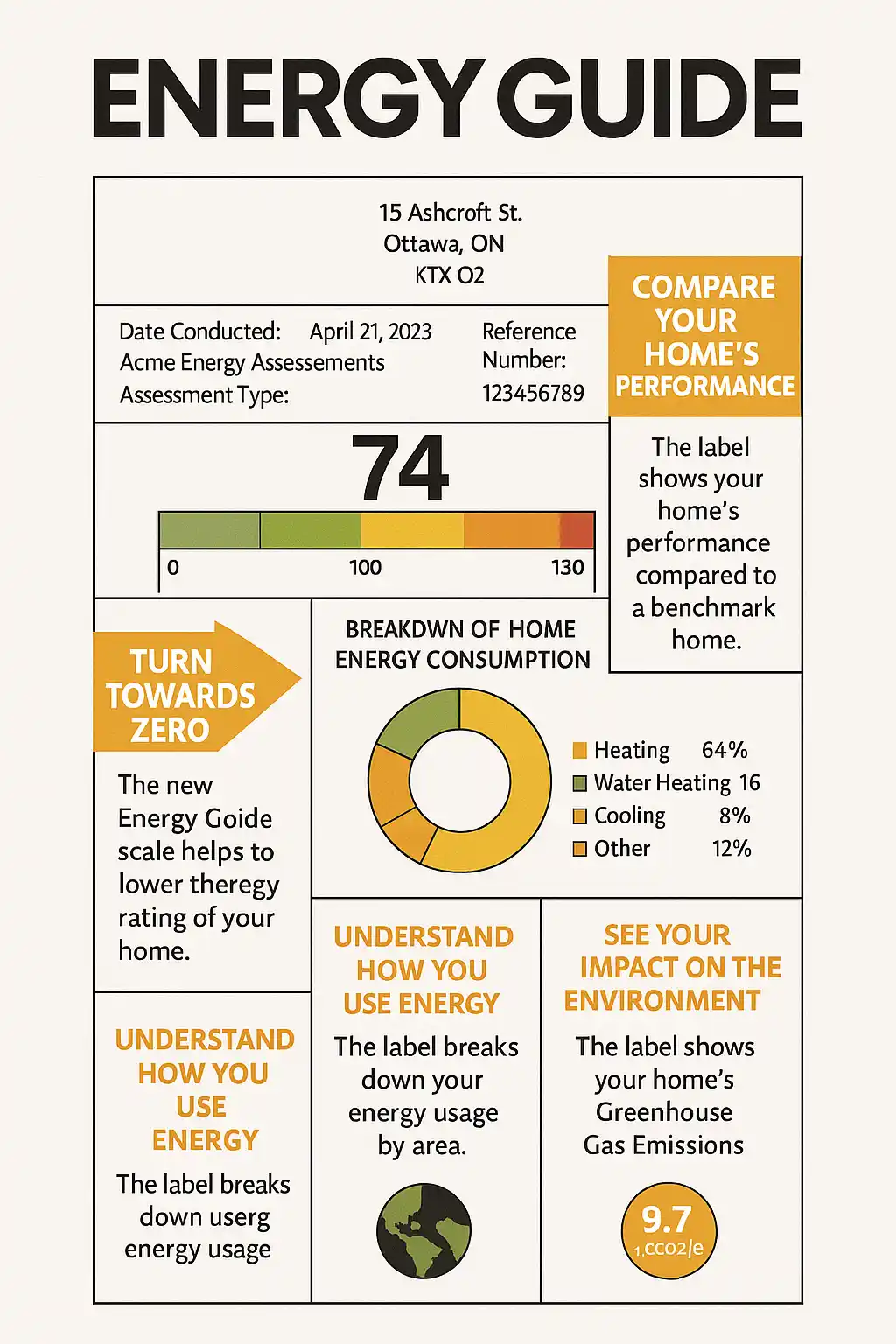
- Review the Energy Audit Report and Results. After the on-site assessment, the auditor will compile all the data into a comprehensive report. You likely won’t get the full report on the same day – it often takes a week or two for them to prepare it – but some auditors will give you a quick verbal summary before they leave. When the report is ready, you’ll receive an official EnerGuide rating for your home (if it’s an NRCan audit) and documentation of all the findings. The report will include your home’s EnerGuide label comparing your energy performance to similar homes, plus a detailed breakdown of where your energy is going (heating, hot water, appliances, etc.). Most importantly, it will provide a prioritized list of recommended upgrades to improve your home’s efficiency. For example, the report might suggest adding R50 insulation to your attic, sealing the basement rim joists, upgrading to a high-efficiency furnace, or installing a smart thermostat. This is essentially your energy improvement roadmap. Take the time to go over the report carefully. At MUS Energy Solutions, our energy advisors will walk you through the results in plain language, ensuring you understand each recommendation and the potential benefits. We’ll answer any questions you have and help you decide on next steps that fit your budget and goals.
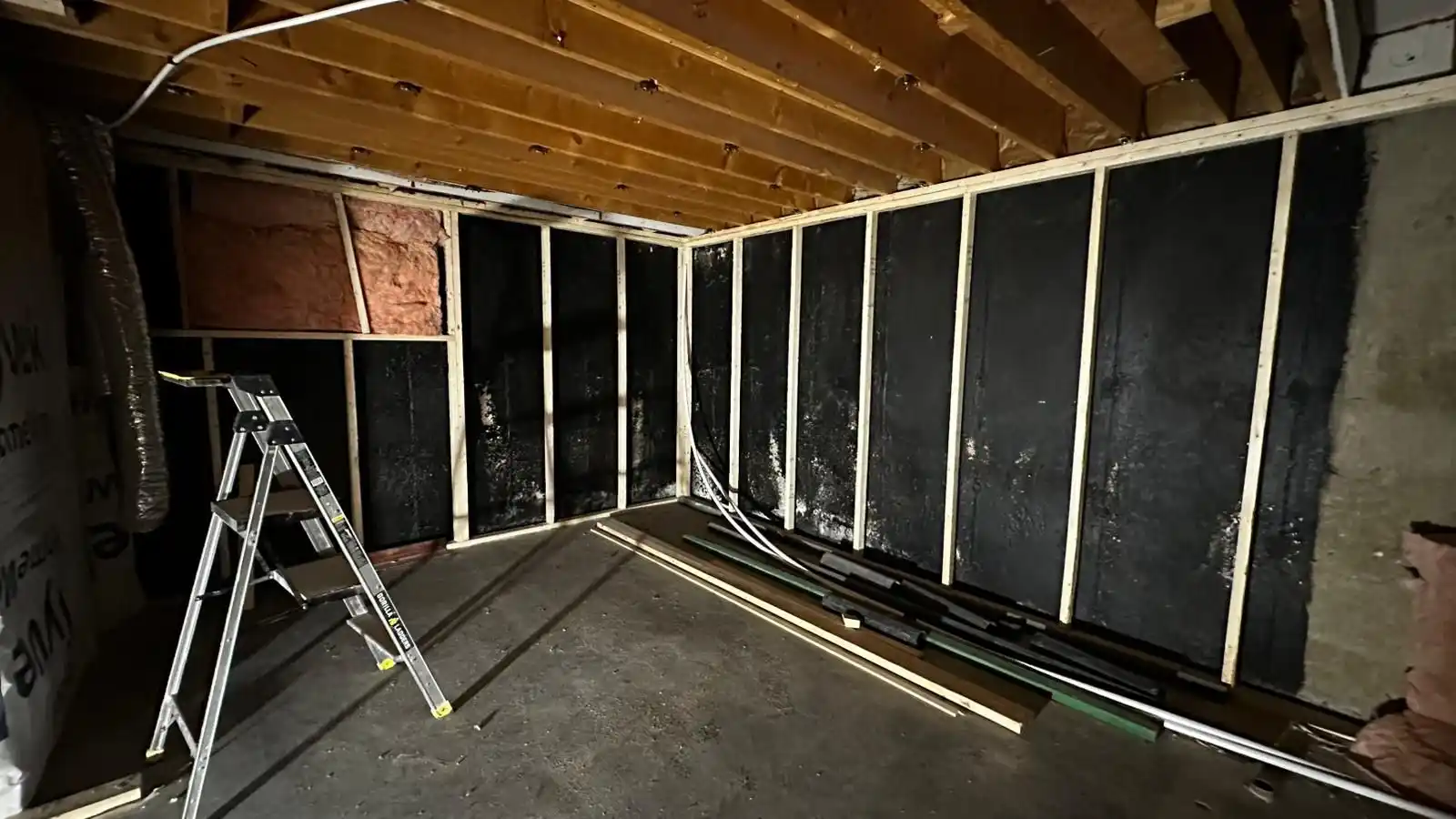
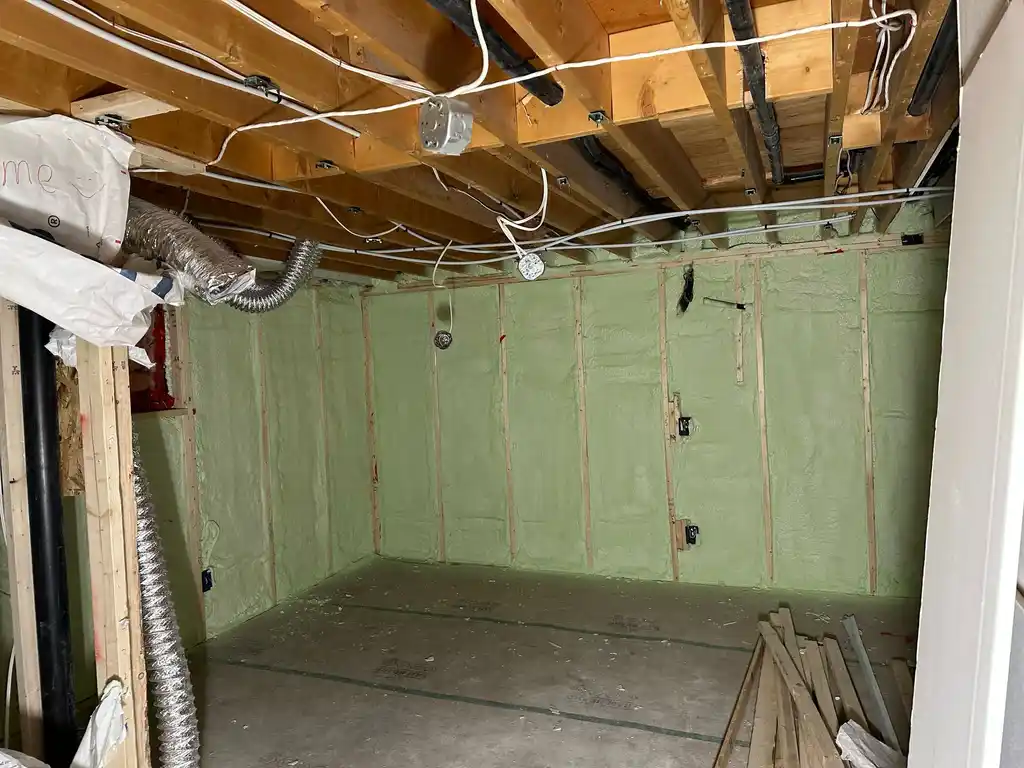
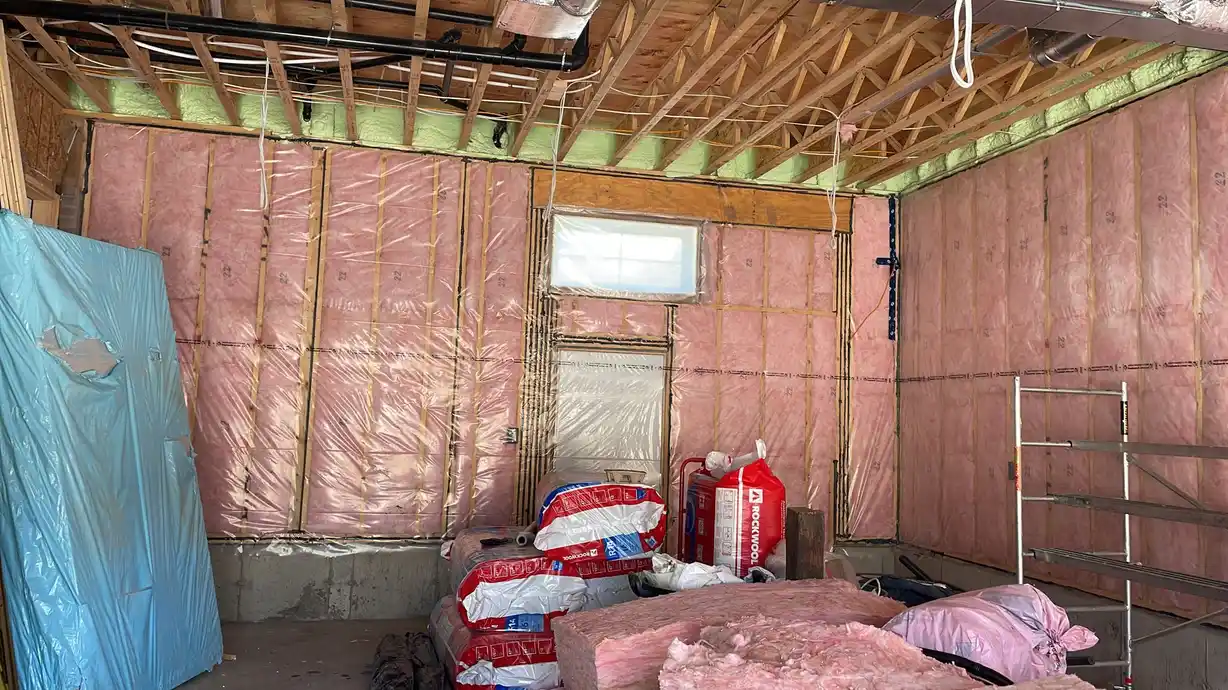
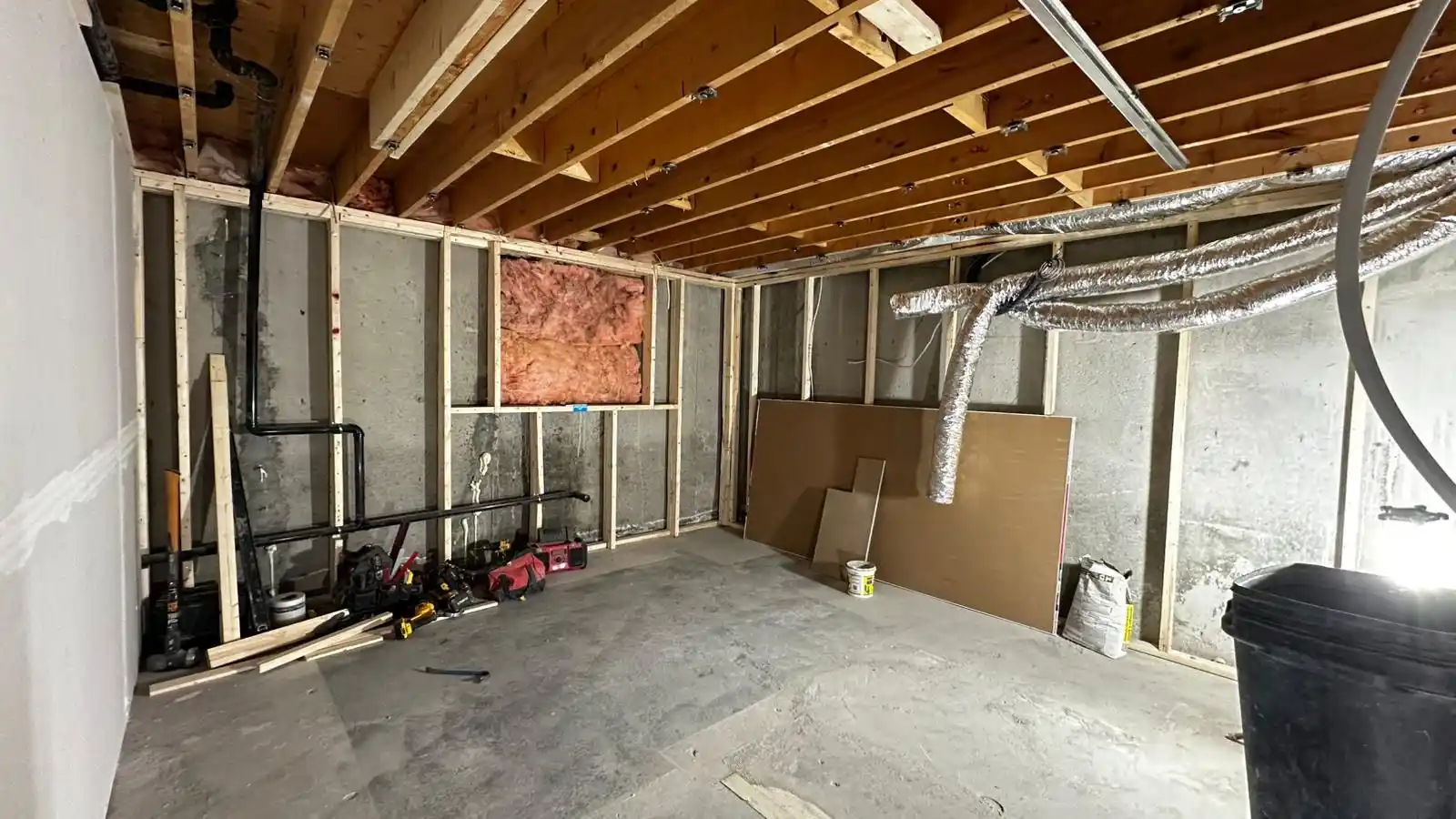
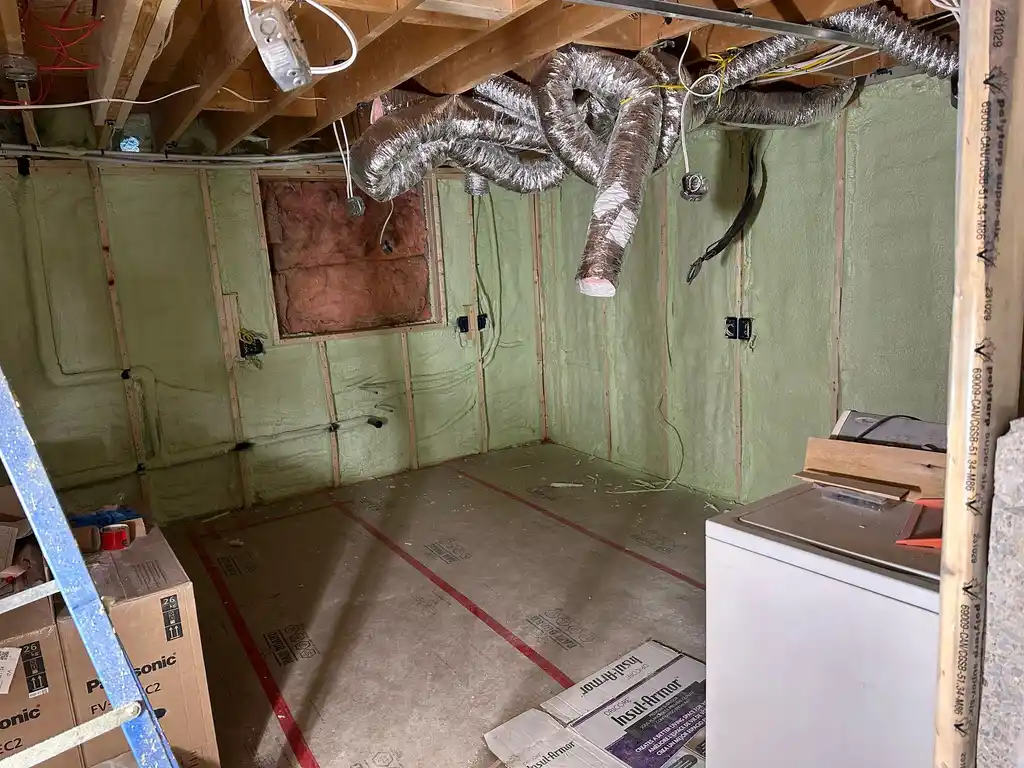
- Implement Recommended Upgrades (Insulation, Air Sealing, etc.). Now the real gains begin – it’s time to act on the audit’s recommendations. You don’t have to do everything at once, but tackling as many improvements as possible will maximize your energy savings. Common upgrades after an energy audit include: adding insulation (for instance, topping up attic insulation, insulating exposed foundation walls, or injecting foam into wall cavities), air sealing all those leaks identified (caulking gaps, weatherstripping doors and windows, sealing ductwork leaks, etc.), upgrading to more efficient HVAC equipment (furnace, heat pump, water heater), and sometimes replacing older windows or doors with high-efficiency models. Focus on the items the audit report highlighted as high priority. Often, improving insulation and airtightness yields the biggest benefit in Ottawa’s climate. This is where MUS Energy Solutions can truly help you — as insulation and building envelope specialists, we can carry out the recommended upgrades with professional quality. For example, if your audit shows that your home’s air barrier is leaky, we might suggest installing spray foam insulation in critical areas to both insulate and seal those air leaks in one go. Our team has extensive experience with air barriers and spray foam insulation, so we can ensure your home is tightened up properly without compromising ventilation or indoor air quality. Spray foam insulation being applied to open wall cavities as an upgrade. Spray foam expands to fill gaps and forms an effective thermal insulation layer as well as an airtight seal. Upgrades like this can significantly improve your EnerGuide score and eliminate cold drafts identified during the energy audit. By completing the suggested upgrades, you’ll start noticing improvements: rooms will stay warmer (or cooler in summer) with less heating/cooling effort, and your monthly energy bills will begin to drop. Make sure to keep all receipts and documentation of the upgrades, especially if you plan to pursue rebate programs. For Ottawa homeowners, MUS Energy Solutions can not only perform these upgrades — from spray foam insulation Ottawa installations to advanced air-sealing techniques — but also guide you on which improvements qualify for rebates. We aim to provide actionable value: that means after your audit, we give you a clear plan and can execute it, so you see real results in comfort and savings.
- Schedule a Follow-Up Audit (for Rebates, Optional). This step may not be necessary for everyone, but if you are participating in a rebate or grant program, a post-upgrade or follow-up energy audit is typically required. After you have implemented the recommended retrofits (usually within a certain timeframe like Greener Homes required within 12-18 months), your energy advisor will return to conduct another evaluation. This is essentially a repeat of the initial audit to measure the improvement. They will perform another blower door test and update your home’s EnerGuide rating. The follow-up audit verifies the energy efficiency gains and is used to unlock rebates – for instance, programs might reimburse up to $600 of your audit fees and provide grant money (up to several thousand dollars) for the upgrades you did. Even if you’re not after rebates, it can be rewarding to do a post-audit to see how much better your home performs. In Ottawa, many incentive programs in the past covered the entire cost of this second audit, effectively making it free for the homeowner. When you work with MUS Energy Solutions, we will handle all the paperwork and coordination for any needed follow-up audit. We stay with you until you achieve the results – and the rebates – that you’re aiming for.
By following these steps on how to get a home energy audit in Ottawa, you’ll go from initial inquiry to completed upgrades smoothly. Next, let’s discuss some of the specific upgrade solutions in a bit more detail, and how they tie back to what the audit found.
From Audit to Upgrades: Improving Your Home’s Efficiency in Ottawa
A home energy audit is only as good as the action you take afterward. Fortunately, the audit report gives you a clear list of improvements, and many of them align with services offered by MUS Energy Solutions. We pride ourselves on being a one-stop shop for energy audits and the follow-up work to fix issues uncovered. Here are some typical upgrade solutions after an energy assessment, and how they benefit your Ottawa home:
Insulation Upgrades: Insulation is often the first recommendation, since Ottawa homes need robust insulation to withstand our climate. Your audit might reveal insufficient attic insulation (common in older homes) or uninsulated basement walls or crawlspaces. Upgrading insulation can dramatically reduce heat loss. MUS Energy Solutions specializes in insulation solutions including spray foam insulation, blown-in cellulose, and fiberglass batts. For example, spray foam is an excellent choice for insulating rim joists, cathedral ceilings, or walls because it provides both high R-value and air sealing. With proper insulation, your furnace and AC run less often, saving energy and money.
Air Sealing and Air Barrier Enhancement: The blower door test from the audit will pinpoint leaks in your home’s air barrier – the hidden layer that stops uncontrolled airflow. Common leakage points are attic hatches, recessed lights, window frames, door thresholds, and any penetrations for wires or pipes. Sealing these leaks is one of the most cost-effective upgrades. We use techniques like caulking gaps, adding weatherstripping, and applying spray foam or sealant to leaky areas (for instance, sealing around plumbing penetrations in the attic or basement). By tightening the air barrier, we eliminate cold drafts and help your home hold heat much longer. The result is a cozier home and less strain on your heating system. As Ottawa energy audit veterans, we know exactly where homes in this region tend to leak and can target those spots efficiently.
HVAC and Mechanical Systems: If your furnace or air conditioner is outdated or your water heater is an energy hog, the audit report will call that out. Upgrading to modern high-efficiency equipment (like a condensing gas furnace, heat pump, or tankless water heater) can greatly cut energy usage. While MUS Energy Solutions focuses on the building envelope, we can connect you with trusted local HVAC partners and ensure that any new equipment is properly sized for your newly efficient home. Additionally, improving ventilation with a heat recovery ventilator (HRV) might be suggested by your auditor, especially after tightening the house, to keep fresh air flowing without wasting heat.
Windows and Doors: Audits sometimes recommend replacing very old, leaky windows or doors. This can be a larger investment, but new Energy Star windows can reduce drafts and improve comfort (plus increase home value and aesthetics). Even if full replacement isn’t in the budget, we often help customers improve existing windows by adding storm windows or sealing around window frames with low-expansion foam. Small fixes can yield noticeable improvements.
Every home is different, but the Renovation Upgrade Report from your audit will list upgrades in order of priority. Our job at MUS Energy Solutions is to help you execute those upgrades professionally. With years of local experience, we’ve worked on Ottawa homes of every era – we understand common construction methods here and how to retrofit them for better efficiency. All work is carried out to high standards and in compliance with Ontario building codes and energy program requirements. By choosing a local expert, you also gain peace of mind that we’ll be around for any follow-up or future needs. Our goal is to turn the audit’s recommendations into tangible results: a home that uses less energy, lowers your bills, and keeps you comfortable in all seasons.
Building Trust and Local Expertise: It’s important to choose an auditor and contractor you can trust. As an Ottawa-based company, MUS Energy Solutions takes pride in our community reputation. We are fully licensed and insured, and our team includes certified energy advisors and insulation installers. We live and work in the Ottawa area, so we know what challenges local homes face – from older homes in Centretown with no wall insulation, to suburban homes in Orleans coping with ice dams. Our clients range from single-family homeowners to landlords managing multi-unit residences and local businesses looking to cut energy costs. In every case, we approach projects with a helpful, professional attitude and an emphasis on education. We won’t just do an audit and vanish – we’re here to answer questions, explain the why and how of each recommendation, and guide you through implementing solutions at a pace you’re comfortable with. That commitment to trust and local expertise is what sets us apart.
Now that we’ve covered the process and the solutions, let’s address some common questions Ottawa homeowners have about getting a home energy audit.
Trustindex verifies that the original source of the review is Google. A group of very dedicated young individuals. Their commitment to their craft is commendable. Their prices are very competitive and affordable and they are very courteous and efficient. I will recommend their services to anyone needing it.Tunde AsajuTrustindex verifies that the original source of the review is Google. Amazing work!Ali FakihTrustindex verifies that the original source of the review is Google. Excellent services, great communication. Highly recommended.John PriceTrustindex verifies that the original source of the review is Google. Best of the best! I got 3 different quotes, MUS ENERGY price was competitive and the service was worth every dollarDana BrownTrustindex verifies that the original source of the review is Google. Review for Mus Energy Ahmed I had a great experience with Mus Energy Ahmed! The customer service was excellent—Ahmed was professional, helpful, and attentive to all my needs. Their pricing is competitive, and the overall service exceeded my expectations. I highly recommend Mus Energy Ahmed to anyone looking for reliable and affordable attic insulation & energy solutions. Thank you for the awesome service!Muhammad TalhaTrustindex verifies that the original source of the review is Google. Great experience from MUS energy, learnt lots of new things about saving energy in my home. The owner also was very informative and kind. He helped my husband and me with getting rebates and was very helpful with anything we needed. Thanks for all your hard work. 😄Melanie TerleckiTrustindex verifies that the original source of the review is Google. Good price and excellent services. Highly recommended 👍Akshay
Frequently Asked Questions (FAQ)
How do I schedule a home energy audit in Ottawa?
What does a home energy audit include?
How much does a home energy audit cost in Ottawa?
How long does an energy assessment take to complete?
Is a home energy audit worth it?
Can I perform a DIY energy audit instead of hiring a professional?
Boost Your Home’s Efficiency Today:
A home energy audit is the starting point for a greener, more cost-effective home. If you’re wondering how to get a home energy audit in Ottawa, the answer is simple – take the first step and reach out to local experts. MUS Energy Solutions is here to guide you through the entire journey, from the initial energy assessment to implementing top-quality insulation and air sealing upgrades. We combine trustworthy local expertise with a passion for helping Ottawa homeowners, landlords, and businesses save energy and money. Ready to get started? Contact MUS Energy Solutions today to schedule your Ottawa home energy audit and take the next step toward a more efficient and comfortable home!
Areas We Proudly Serve:
Ontario
Frontenac, Lanark, Leeds and Grenville, Lennox and Addington, Ottawa, Prescott and Russell, Renfrew, Stormont, Dundas and Glengarry
Quebec
Antoine-Labelle, Argenteuil, Beauharnois-Salaberry, Deux-Montagnes, Gatineau, L'Assomption, La Rivière-du-Nord, La Vallée-de-la-Gatineau, Laval, Le Haut-Saint-Laurent, Les Collines-de-l'Outaouais, Les Laurentides, Les Moulins, Les Pays-d'en-Haut, Longueuil, Mirabel, Montréal, Papineau, Pontiac, Roussillon, Thérèse-De Blainville, Vaudreuil-Soulanges,